How should Workday Learning AI tutors be evaluated?
Workday Learning powered by Sana includes personalised AI tutoring alongside authoring and learning administration. The tutor should be understood as an interactive learning service whose value depends on its task and knowledge context.
Evidence CDecision horizon 6 monthsUpdated 09 Oct 2026Proof patterns 1
Editorial context for How should Workday Learning AI tutors be evaluated?
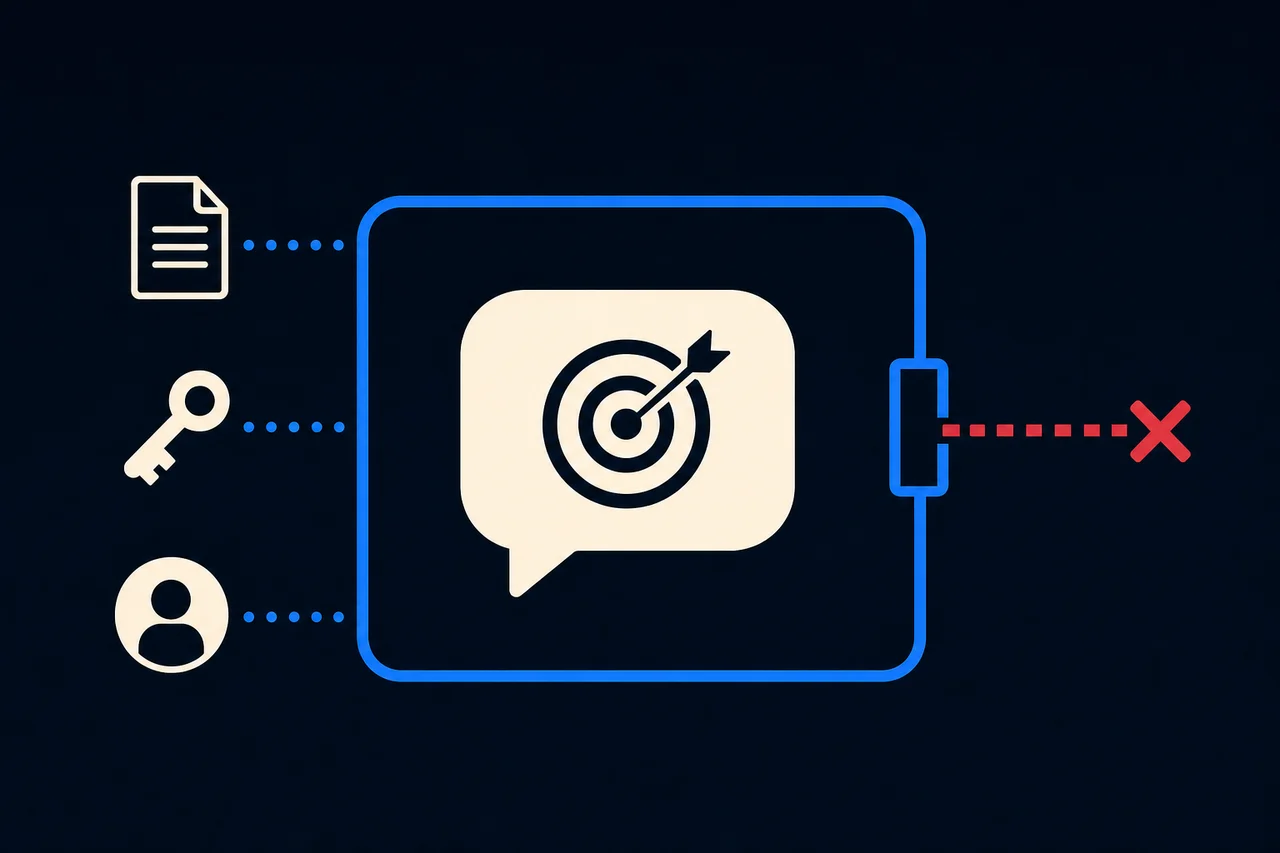
LT Horizon generated editorial illustration · not evidenceImage provenanceLT Horizon Visual Editor v2 · GPT-Image-2 generated editorial illustration; never evidence.
A conversation within a learning experience
The product proposition describes AI tutors as part of the learner experience. Rather than only receiving fixed content, the learner can interact with an assistant around a learning need. The resulting answer can influence how the learner interprets or attempts the task.
That makes the content boundary important. An answer about approved learning material and an open-ended response about unrelated enterprise information have different scopes. Fluency alone does not show that the response is relevant or supported.
What the bounded example shows
The cited Gorgias customer story describes grounding a tutor in product-help documentation for a specific course. It reports favourable participant feedback and task-related results in that setting.
The story supplies a concrete example of choosing a knowledge source and a learning purpose. It is hosted by Sana and does not independently establish broad transfer, retention or performance effects. It also should not be used to infer identical controls in every Workday tenant.
Interaction quality and learning quality
An answer may be convenient without being correct, and a correct answer may not be sufficient to teach the underlying skill. Tutor evaluation therefore involves both response behaviour and the result for the defined learning task.
NIST's generative-AI guidance provides a wider basis for considering uncertainty, source provenance and risk. The assessment below applies that reasoning to a bounded learner experience, while keeping product availability, customer configuration and demonstrated educational outcomes as separate claims.
How to read this briefCheck the sources to see what is documented. Our recommendation explains what that means for your decision. Proof patterns add specific design or implementation examples and explain their limits.
LT Horizon DECISION BRIEF
Answer
Test an AI tutor against a specific learning task and approved sources. Check incorrect answers, escalation, permissions and accessibility, then compare the results with your existing approach.
Who should care
Learning product owners, AI governance teams, instructional designers, compliance leaders and information-security teams.
Recommended action
PILOT — use a bounded content domain with measurable outcomes and a documented failure threshold before expanding the tutor to broader enterprise knowledge.
LT Horizon interpretation · Evidence confidence C
What changed
AI tutoring is becoming part of the core enterprise-learning experience rather than a separate experimental tool.
Why it matters
A tutor can influence interpretation, practice and learner decisions. Its value and risk therefore depend on more than response quality: source grounding, user context, permissions and failure handling matter.
Use cases & proof
Where this holds up in practice
These examples show how a specific claim is supported by documentation or an implementation. Read their limits before applying them to your own environment.
Proof pattern · Evidence C
A bounded, grounded AI tutor can be evaluated against real learner tasks
Scenario
An organisation pilots an AI tutor in a deliberately narrow learning domain, grounds it in approved knowledge and evaluates both failure behaviour and whether learners can complete a defined task or learning objective.
Architecture pattern
Approved knowledge sources and permissions → AI tutor → learner interaction → observability, feedback and escalation → measured task or learning outcome; governance and risk controls sit across the full loop.
Observed / documented outcome
Workday positions personalised AI tutors as a capability of Workday Learning, powered by Sana. NIST provides cross-sector AI and generative-AI risk-management guidance for governing, mapping, measuring and managing AI systems. Separately, Gorgias describes a real Sana AI tutor deployment grounded in help documentation for a specific product course and reports positive learner task and feedback signals.
What this proves
A learning AI tutor can be deployed as a bounded, knowledge-grounded interaction and evaluated against both technical failure behaviour and a concrete learner task. This supports piloting with approved sources, explicit success criteria, telemetry and human escalation rather than treating conversational fluency as proof of value.
What it does not prove
It does not prove that Workday Learning, powered by Sana will reproduce the Gorgias outcome, that the Gorgias tutor was independently audited for hallucination or safety, that positive survey feedback establishes durable learning transfer, or that an unrestricted enterprise-wide tutor is appropriate.
Apply with these constraints
Define the approved source corpus, permissions, excluded topics, privacy boundaries, adversarial and outdated-content tests, failure thresholds, human escalation, baseline comparison, task or learning outcome measures and post-pilot decision criteria before expanding scope.
Last checked 18 Sept 2026 · Reviewed before publication.
Implementation implications
Prerequisites
Define the permitted use cases, learner populations, approved knowledge sources, privacy boundaries, human escalation path, prohibited outputs and success measures before pilot launch.
Architecture implications
Treat the tutor as an AI service within the learning architecture with explicit data flows, content boundaries, observability and review controls.
Risks
Unsupported answers, over-reliance, disclosure of restricted information, inconsistent coaching, inaccessible interaction patterns and weak evidence that the experience improves learning.
Testing implications
Include adversarial prompts, ambiguous questions, outdated source material, restricted-user scenarios, accessibility tests, hallucination capture, repeatability checks and comparison with a baseline learning experience.
Source register
What the evidence establishes
What changed with Workday Learning, powered by Sana? — Workday evidence
Public summary awaiting review. See the original source.
Publication review is recorded in the evidence and correction history. Images illustrate the article; they are not evidence.
History and corrections
Article body revision 1 · added 09 Oct 2026. Explanatory text added to the published evidence snapshot; evidence confidence, availability and source verification dates are unchanged.
Published revisions are retained. Update dates change only after a change to the content or evidence.
Correction: Wording reviewed for clarity. The evidence grade and source verification dates are unchanged. · 30 Sept 2026
Keep a clearer view of learning technology.
Get occasional email updates when LT Horizon publishes new Intelligence and Horizon articles. Free to read, with no account required.
Our practical newsletter format brings one question, one idea and one exercise, alongside selected source-linked articles. Editions follow useful reviewed evidence.