What should enterprises test in Degreed's AI and skills-intelligence model?
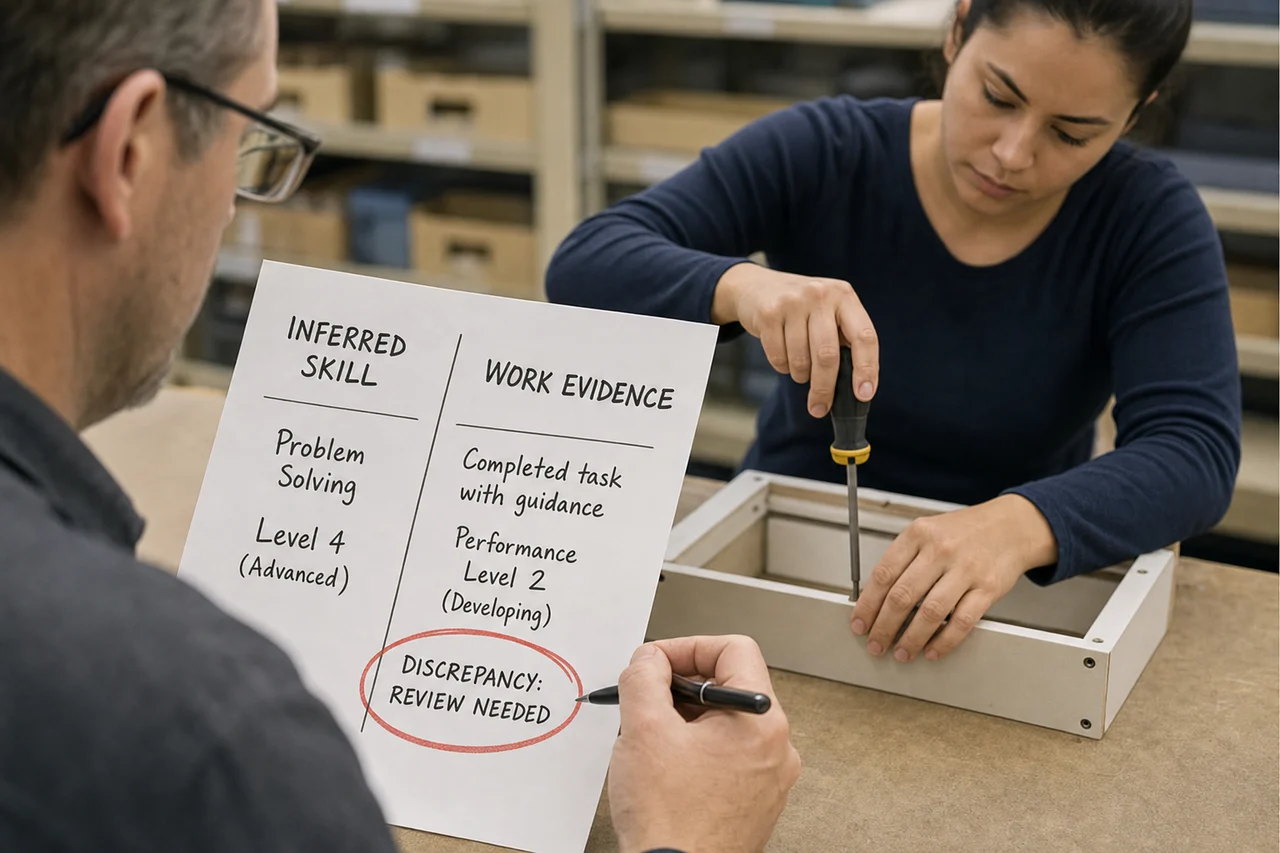
Degreed connects its learning proposition with skills context and Maestro's AI coaching experiences. Understanding that model requires separating what the platform records about skills from what a learner can demonstrably do.
Evidence CDecision horizon NowUpdated 09 Oct 2026
Editorial context for What should enterprises test in Degreed's AI and skills-intelligence model?
LT Horizon generated editorial illustration · not evidenceImage provenanceLT Horizon Visual Editor v2 · GPT-Image-2 generated editorial illustration; never evidence.
A shared context for learning and coaching
Degreed's Maestro material describes coaching, role-play, skill reviews, pathway curation and personalised learning experiences using learning and skills history. Degreed.AI extends the proposition to shared skills context and tools connected through MCP.
In this account, skills information helps determine the context of an interaction. A role expectation, a recorded learning history and an inferred skill are different inputs, even when they appear in one profile. The usefulness of a recommendation depends on how those inputs relate to the actual task the learner needs to perform.
Coaching and connected action are different layers
Role-play creates a setting in which a learner can practise an interaction. Coaching provides feedback or support. Connected tools can extend the experience into other systems or operations. These capabilities should not be collapsed into a single statement that the platform knows someone's ability.
The product material describes organisational permissions, endorsed content and human approval as controls. Those descriptions establish the intended boundaries of the proposition, but do not independently verify how a particular configured workflow behaves.
What the evidence does and does not establish
The cited sources are current Degreed product propositions. They explain the relationship between learning, skills context and AI experiences, while specific agent availability remains a procurement question.
A skills profile is consequently a representation used by the system, not automatically validated proficiency. The assessment below addresses that gap: whether the context and the resulting interactions support a defined capability decision, rather than merely produce more personalised-looking content or additional engagement.
How to read this briefCheck the sources to see what is documented. Our recommendation explains what that means for your decision. Proof patterns add specific design or implementation examples and explain their limits.
LT Horizon DECISION BRIEF
Answer
Degreed’s product material connects skills data with learning, Maestro coaching and role-play, and tools using MCP. Check the accuracy of skill profiles and role expectations before relying on recommendations or AI actions. Confirm availability and approval controls for the specific functions you plan to use.
Who should care
Degreed customers, L&D leaders, skills teams, talent architecture owners and buyers deciding whether a learning experience platform/skills layer can become a wider AI-enabled capability platform.
Recommended action
INVESTIGATE — run a skills-context quality assessment before using AI breadth as a consolidation argument. Measure whether the platform improves validated capability decisions, not only content discovery or engagement.
LT Horizon interpretation · Evidence confidence C
What changed
Degreed describes shared skills context for learning, coaching and connected AI tools. Specific agent availability still needs confirmation.
Why it matters
Personalisation, coaching and agents are only as useful as the skills context they act on. If skill definitions, proficiency evidence or role expectations are weak, automation can make recommendations faster without making them more accurate.
Implementation implications
Prerequisites
Governed skills taxonomy, proficiency model, role architecture, trusted learning history, agreed capability outcomes and clear integration ownership.
Architecture implications
Agree which system holds skill definitions and proficiency evidence, then check how Degreed Learning, Maestro and external tools use it. Assign responsibility for approvals and any resulting actions.
Risks
Skills inference can be mistaken for validated capability; AI coaching can optimise engagement without proving transfer; multiple skills systems can create conflicting workforce context.
Testing implications
Test skill-profile accuracy, calibration to organisational rubrics, recommendation relevance, coaching/role-play quality, evidence of skill progression, integration boundaries and approval controls for agentic actions.
Publication review is recorded in the evidence and correction history. Images illustrate the article; they are not evidence.
History and corrections
Article body revision 1 · added 09 Oct 2026. Explanatory text added to the published evidence snapshot; evidence confidence, availability and source verification dates are unchanged.
Published revisions are retained. Update dates change only after a change to the content or evidence.
Correction: Evidence grade corrected from A to C on 30 September 2026. The cited sources support documented product claims but do not provide independent proof from live implementations. Wording was also reviewed for clarity. Source verification dates are unchanged. · 30 Sept 2026
Keep a clearer view of learning technology.
Get occasional email updates when LT Horizon publishes new Intelligence and Horizon articles. Free to read, with no account required.
Our practical newsletter format brings one question, one idea and one exercise, alongside selected source-linked articles. Editions follow useful reviewed evidence.